
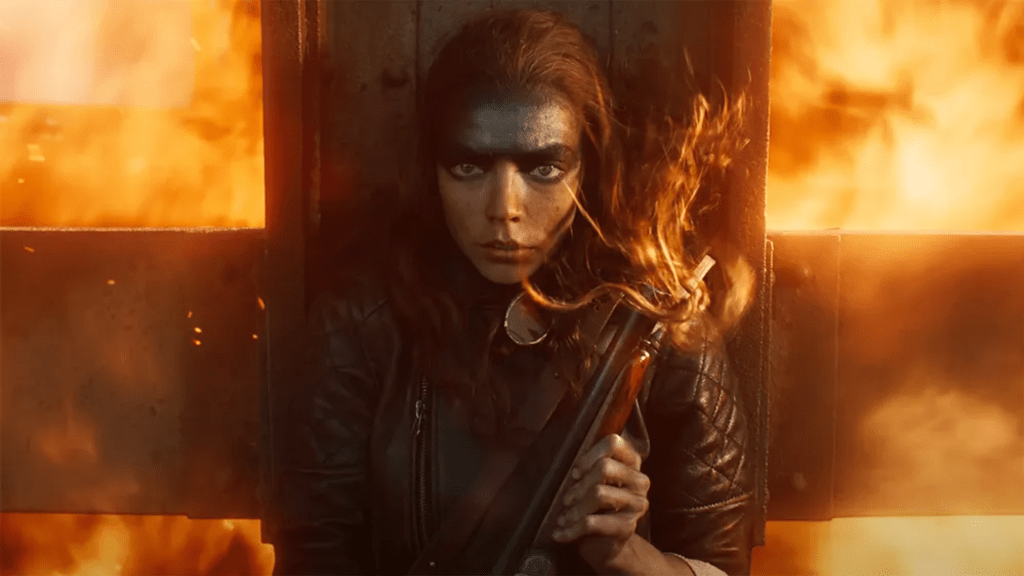
It’s been almost a decade since George Miller returned to the Wastelands and Mad Max: Fury Road surprised the shit out of everyone. Fury Road transcended expectations by a near impossible amounts, shot onto theater screens and very rapidly gained an ardent critical fanbase that catapulted it all the way to the Academy Awards. Fury Road seemed to have no right to be as good, as smart, as kinetic as it was. Frankly, it was a bit of a fluke, the rare case of a generations-after-the-fact sequel pulling off a miracle. It was, it is, special.
What we’ve forgotten about the Fury Road love fest, though, is the rocky – actually scary – route it took to get there. In 2015, Fury Road was critically lauded at the same time disturbing groups of men’s rights activists were raging about the backseat Mad Max took to Charlize Theron’s Furiosa, the situation reaching a fever pitch as some movie theaters took extra precautions around screenings after a gun and hatchet-wielding man turned up to wreak havoc during a screening of the film in Nashville. Fury Road became fodder for outcries of “feminist propaganda” and a lightning rod for dumbasses on the internet screaming about the film – where Mad Max and Furiosa prove to be an effective, ass-kicking team – as symptomatic of “liberal Hollywood” trying to undermine masculinity. It was dizzyingly idiotic, at the time, and I’d nearly forgotten about the misogynistic panic until I was sitting in a mostly empty theater for Furiosa the Friday it opened, wondering where the hell everyone was, worrying, suddenly, that all of those voices had only gone dormant, and I was about to see a film doomed to fail regardless of how good it might be.
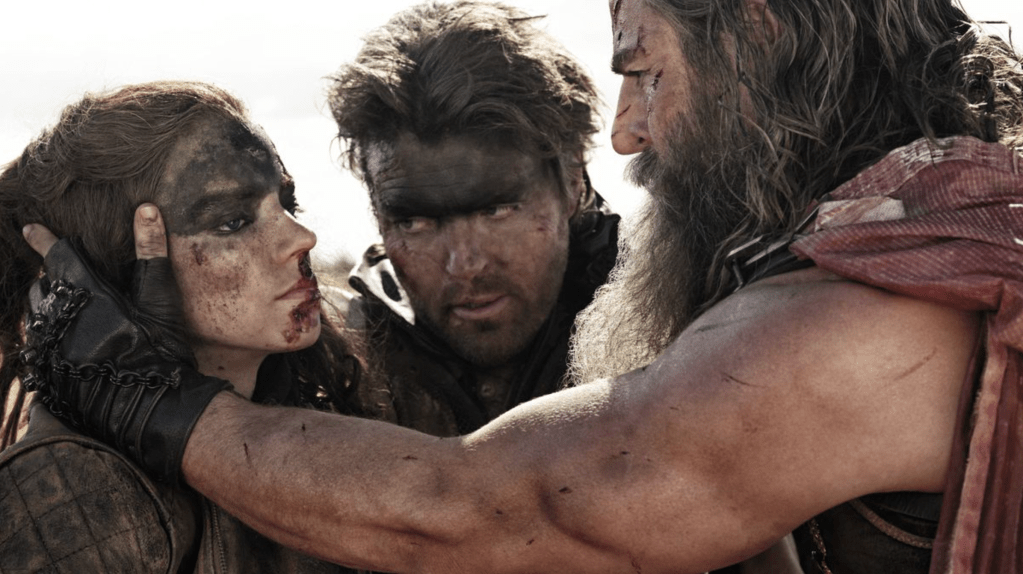
And here’s the thing: Furiosa is really good. It’s good as a pure action movie. It’s good as a car chase film. It might even be great as a revenge saga, and it’s definitely one of the strongest prequels I’ve encountered. Set across decades prior to the action in Fury Road, we meet our title character as a healthy child (Alyla Browne) of the idyllic “Green Place”, puckishly plucking an apple from the Wasteland’s own Garden of Eden. The life she’s known is quickly ended when she’s kidnapped by a gang of bikers foraging the periphery of the land, dragged into the desert wasteland as physical proof of a place worth colonizing. The chase action the franchise is famous for kicks in almost immediately, as young Furiosa’s mother tears into the desert in hot pursuit, a sniper on their tails. One thing leads to another, mom is killed, and Furiosa is brought to live for a period as the adopted “daughter” of a messianic lunatic called Dementus (Chris Hemsworth). Dementus is a violent, absurdist character desperate for the power and resources in the adjacent Gas Town, Bullet Farm and – of course – at The Citadel. Notably, he’s also a pretty fabulous heel turn for Hemsworth, who steals scene after scene.
Time passes, a series of events finds Furiosa passed from Dementus to Joe’s harem, where – still a child – she escapes the ominous advances of Joe’s son only to cut off her hair, disguise herself as a boy and live among the mechanics and war boys as a mute. As Anya Taylor-Joy takes the screen as young adult Furiosa, she lives to survive, doing what she can to make herself useful while avoiding detection. She’s driven by hope and rage; a star map home tattooed on her forearm and a need for revenge burning up her insides.

That’s the gist, and a lot happens in Furiosa as it careens across the Wasteland. Backed against Fury Road, the plotting is significantly more complicated and the themes far less subtle. It would be fair, really, to say Furiosa‘s approach to its character is in some ways burdened by a sense of responsibility to get the details right, to remain faithful to someone so many fell in love with as a strong, singular presence. The result is a film loaded with self-awareness at the level of every turn in metaphor, dialogue and angle of visual rhetoric. It’s devoted to maintaining the legacy of a character and – arguably – all the better for it. Taylor-Joy wears the mantle surprisingly well. Though she obviously doesn’t possess the same battle-worn presence as Theron’s older version of the character, she becomes ferocious and feral, the light she’s capable of carrying in her eyes dimmed to something dead set in its convictions. She sells it, and Miller’s construction of the world supports her at every turn.
What’s remarkable here is though the film is a huge, bold visual assault of kinetic editing and endless explosions, you can feel the love it has for its subject. Where so many entries in big, Hollywood action franchises feel like soulless cash grabs or hacked-up rush jobs, Furiosa exists with purpose. Much will be written about how Furiosa advances what’s set-up in Fury Road; and the ink will spill around every thematic reading. It’s an impeccable progression, daring to dig further into the conditions of global cataclysm – environmental, socio-political, militaristic – that made Fury Road hit so hard. Arguably, though, what’s more miraculous about it is the clear way George Miller seems to want to honor the character he created. At a pivotal point, Furiosa is asked a key question: “do you have what it takes to make it epic?”
It should go without saying: she does.
All of this to say: this is not a film that deserves to be a flop, and this is not a franchise that deserves to slip into oblivion. Though not the easy masterclass Fury Road may have been, Furiosa is still exceptional action fare and a smart, propulsive piece of eye candy from a director who still has much to say. See it, don’t worry about the run time.
 love + squalor
You must be logged in to post a comment.